FIT
Sizing Sleepwear Around How You Sleep
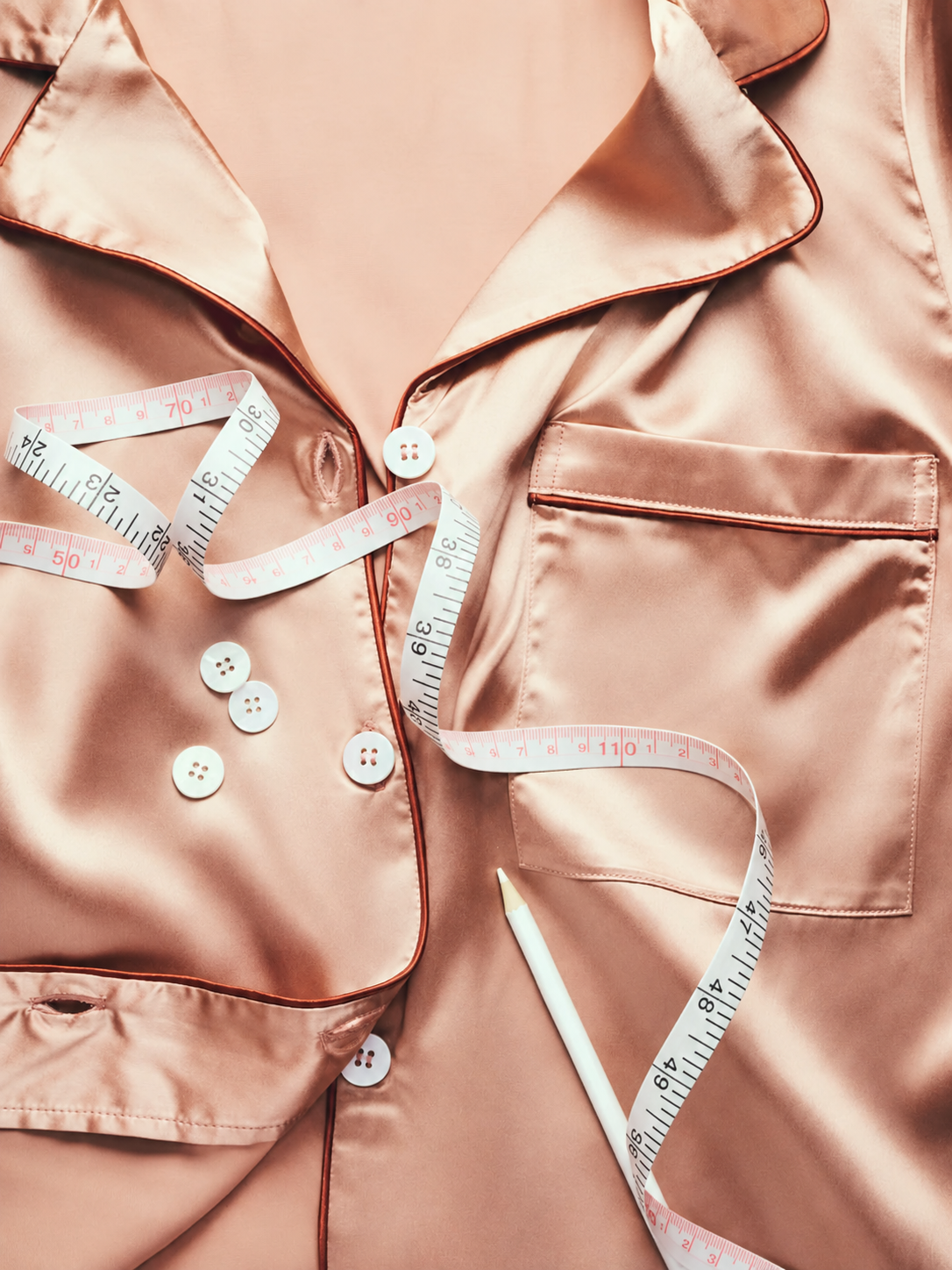
Most clothing is fitted standing in front of a mirror. Sleepwear is used lying down, on your side or your front or your back, turning over several times without waking. That difference is why a set can look correct in the mirror and still be the wrong choice.
The useful question is not what size you take. It is where the fabric ends up once you are horizontal and no longer adjusting it.
Side Sleepers: Watch the Arm and the Hip
On your side, your full body weight presses one arm and one hip into the mattress. Anything sitting on those two points gets compressed for hours. A sleeve that is snug through the bicep turns into a band once you are lying on it, and a hip that is tight in the pants reads as pressure rather than as fit.
Look for room through the upper arm specifically, not overall size. Plenty of people size up an entire set to solve a sleeve problem and end up swimming in the rest of it.
Back Sleepers: Watch the Rise
Lying flat on your back changes where a waistband sits. A low rise slides toward the hips and takes the shirt hem with it, which is what leaves a strip of cold skin across your middle at four in the morning. A higher rise sits above that and stays put.
If you sleep on your back and keep waking up with the top rucked, the answer is usually a higher rise rather than a longer top.
Front Sleepers: Watch the Front Seam and the Buttons
Sleeping on your front puts every closure on the front of a set directly between you and the mattress. Button placement matters more here than anywhere else, and so does how flat the button sits against the placket.
A pullover top with no front closure removes the problem entirely, and that is worth knowing before you spend time comparing sizes that were never the issue.
Sleeves, and the Twist Test
A sleeve that is too wide rotates around your arm through the night and ends up bunched at the elbow. A sleeve too narrow restricts. The workable range is wider than most people assume, and you can check it standing up: raise your arm overhead, bring it down, and see whether the sleeve returns to where it started. If it lands twisted, it will do the same thing all night.
Robes: Length Is About Where You Stand
Robe length is decided by what you do in it, not by height. If it is worn moving around the house, above the knee stays out of the way on stairs. If it is worn standing still in a cold kitchen first thing, mid-calf keeps far more of you warm.
Across both, check the shoulder rather than the chest. A robe is worn open and loose, so the chest measurement is nearly always generous, and the shoulder is the point that decides whether it hangs straight.
Measure Something You Already Own
The most reliable comparison is a set already in your drawer that you like. Lay it flat, note the width across the chest, the width across the waistband relaxed, and the inseam, then hold those three numbers against the measurements on the listing. That comparison beats a size chart, because it is anchored to something you have actually slept in.
Sizes and measurements sit on each product page. If a set arrives and the numbers did not translate the way you expected, our Return & Refund Policy covers the swap and the label is on us.
Thank you for shopping with us, and for treating the end of the day as something worth dressing for.
