CARE GUIDE
Why Sleepwear Needs Its Own Wash Routine
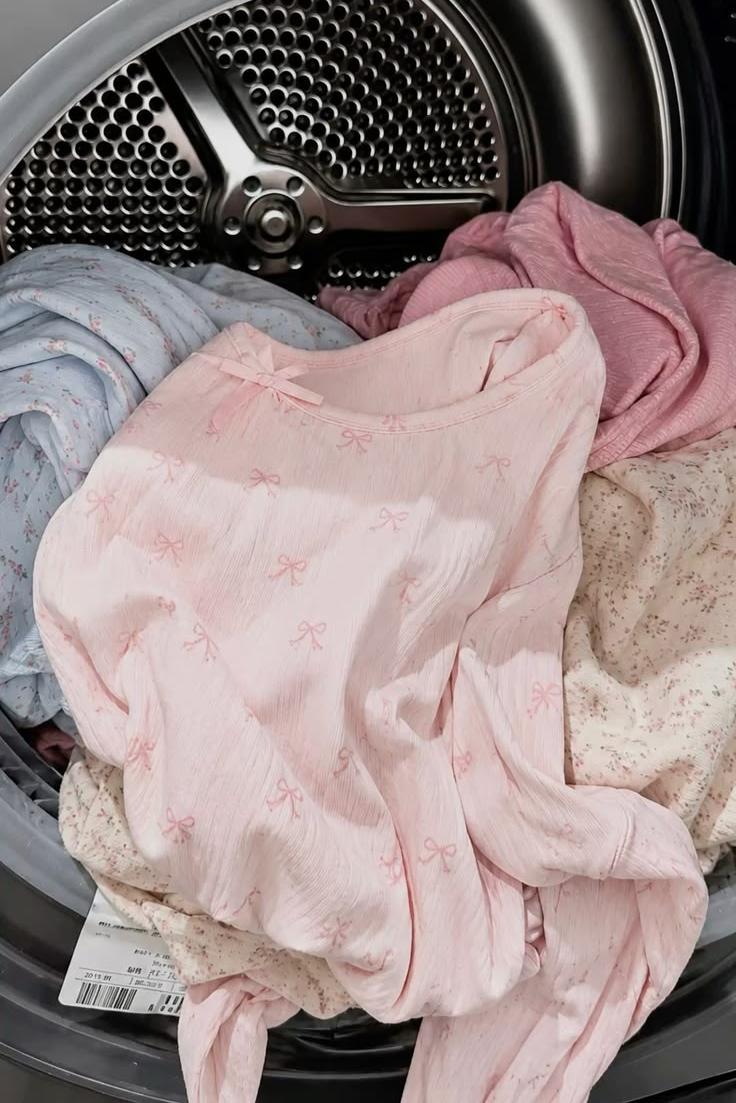
Sleepwear goes into the machine with a different load on it than the rest of your laundry. A shirt worn to an office picks up a few hours of light contact. A sleep set spends eight hours pressed against skin, absorbing body oil, sweat, and whatever moisturizer went on before bed. That is what the wash actually has to remove, and treating it like an ordinary load is why sleepwear starts smelling faintly stale even when it looks clean.
Where the Oil Collects
Body oil does not distribute evenly. It builds at the collar, along the inside of the cuffs, and across the upper back, because those are the places with the most contact and the least air. Left in the fibers it oxidizes, which is what turns pale sleepwear a dull yellow long before the fabric itself has worn out.
The fix is contact time rather than heat. Let the piece sit in the detergent solution for fifteen or twenty minutes before the cycle runs, or choose a pre-soak setting if your machine has one. That does more for oil than raising the temperature, and it costs the fabric nothing.
Detergent, and Why Less Is Better Here
Any detergent that does not fully rinse out leaves residue in the weave. On a coat that is invisible and irrelevant. On something you sleep in it sits against skin for eight hours, which is the reason a lot of people find their sleepwear itchy without ever connecting it to the laundry.
Use a smaller dose than the cap suggests, since those measures assume a heavily soiled full load. Skip fabric softener entirely: it works by depositing a film, and a film is the last thing you want on the layer against your skin. If your machine offers an extra rinse, sleepwear is the load worth using it on.
Water Temperature
Warm water lifts oil better than cold, but hot water shrinks cotton and hardens elastic. The middle setting handles both problems adequately, which is why most sleepwear labels land there. Follow the label sewn into the piece before following any general rule, including this one, because blends behave differently from one another.
Drying, Especially for a Robe
A dryer on high is the fastest way to lose a waistband. Heat is what breaks the elastic's ability to come back, and a set that goes through hot cycles weekly will go slack months earlier than the same set air dried.
Robes need their own approach because of the weight. A wet robe hung on a hanger carries all that water in the hem, and the shoulders stretch to hold it. Dry a robe flat, or fold it over a rail so the weight is spread across the middle rather than hanging from two points.
Between Washes
Sleepwear does not need a cycle after every single night, but it does need air. Draping a set over the end of the bed or the back of a chair for the day lets moisture leave it. Folding it straight back into a drawer while it still holds warmth from your body is what makes it smell tired by the third night.
How the sets and robes are chosen, including what we look at before anything goes on the site, is described on our About Us page. If a piece has not held up the way it should have, our Return & Refund Policy covers what happens next.
Thank you for shopping with us, and for treating the end of the day as something worth dressing for.
